‘Twas the night before Christmas, when all through the house Not a creature was stirring, not even a mouse; The stockings were hung by the chimney with care, In hopes that St. Nicholas soon would be there; The children were nestled all snug in their beds, While visions of sugar-plums danced in their heads; And mamma in her ’kerchief, and I in my cap, Had just settled our brains for a long winter’s nap, When out on the lawn there arose such a clatter, I sprang from the bed to see what was the matter. Away to the window I flew like a flash, Tore open the shutters and threw up the sash. The moon on the breast of the new-fallen snow Gave the lustre of mid-day to objects below, When, what to my wondering eyes should appear, But a miniature sleigh, and eight tiny reindeer, With a little old driver, so lively and quick, I knew in a moment it must be St. Nick. More rapid than eagles his coursers they came, And he whistled, and shouted, and called them by name; “Now, Dasher! now, Dancer! now, Prancer and Vixen! On, Comet! on, Cupid! on, Donder and Blitzen! To the top of the porch! to the top of the wall! Now dash away! dash away! dash away all!” As dry leaves that before the wild hurricane fly, When they meet with an obstacle, mount to the sky; So up to the house-top the coursers they flew, With the sleigh full of Toys, and St. Nicholas too. And then, in a twinkling, I heard on the roof The prancing and pawing of each little hoof. As I drew in my head, and was turning around, Down the chimney St. Nicholas came with a bound. He was dressed all in fur, from his head to his foot, And his clothes were all tarnished with ashes and soot; A bundle of Toys he had flung on his back, And he looked like a pedler just opening his pack. His eyes—how they twinkled! his dimples how merry! His cheeks were like roses, his nose like a cherry! His droll little mouth was drawn up like a bow And the beard of his chin was as white as the snow; The stump of a pipe he held tight in his teeth, And the smoke it encircled his head like a wreath; He had a broad face and a little round belly, That shook when he laughed, like a bowlful of jelly. He was chubby and plump, a right jolly old elf, And I laughed when I saw him, in spite of myself; A wink of his eye and a twist of his head, Soon gave me to know I had nothing to dread; He spoke not a word, but went straight to his work, And filled all the stockings; then turned with a jerk, And laying his finger aside of his nose, And giving a nod, up the chimney he rose; He sprang to his sleigh, to his team gave a whistle, And away they all flew like the down of a thistle, But I heard him exclaim, ere he drove out of sight, “Happy Christmas to all, and to all a good-night.”
Fairy tales are more than true: not because they tell us that dragons exist, but because they tell us that dragons can be beaten.
Thursday, 27 April 2017
A Visit from St. Nicholas - Clement Clarke Moore
The Little Red Hen - Margot Zemach
summary of The Little Red Hen
In the tale, the little red hen finds a grain of wheat and asks for help from the other farmyard animals (most adaptations feature three animals, a pig, a cat, and a rat, duck, goose, dog, or goat ) to plant it, but none of them volunteer.At each later stage (harvest, threshing, milling the wheat into flour, and baking the flour into bread), the hen again asks for help from the other animals, but again she gets no assistance.
Finally, the hen has completed her task and asks who will help her eat the bread. This time, all the previous non-participants eagerly volunteer. She declines their help stating that no one aided her in the preparation work. Thus, the hen eats it with her chicks leaving none for anyone else.
The moral of this story is that those who say no to contribution to a product do not deserve to enjoy the product: "if any would not work, neither should he eat."
this post was written and edited by HOME PC
to read full book CLICK HEREThe Secret Garden -Frances Hodgson Burnett
SUMMARY of The Secret Garden
The Secret Garden by Frances Hodgson Burnett is a story of rebirth as a result of the power of love. It opens with Mary Lennox, a 10-year-old girl who lives in India with her English parents. She is terribly neglected by them, causing her to be sickly, unpleasant, and demanding. When her parents die in a cholera epidemic, Mary is sent to live with her uncle, Archibald Craven, in Yorkshire, England. Mr. Craven lives in a huge manor house with nearly 100 rooms, most of which are unused since the death of his wife 10 years earlier, an event that has left him bereft. When she arrives at the Misselthwaite estate, the servants let her know that her uncle will pay no attention to her and that she is expected to get by on her own.
Soon after her arrival, Mary learns about a secret garden on the estate that has been locked away for 10 years. She becomes enchanted with the idea of the garden and determined to find it, and eventually she locates it and goes inside. It appears to be abandoned, but she finds a few sprigs of new growth and begins tending to them even though she knows nothing about gardening. Mary befriends Ben Weatherstaff, a gardener on the estate, and questions him about the garden, but he makes it clear that it is not to be discussed. She learns that the garden belonged to the late Mrs. Craven and her husband ordered that it be locked away after her death because it caused him too much pain. Mary also befriends Dickon Sowerby, the brother of her housemaid Martha, who is a great lover of nature and is beloved by every living thing, including every animal he meets, and he begins to help Mary tend to the garden.
After hearing the soft sound of crying from time to time in the house, Mary eventually discovers Colin, the sickly, demanding son of Mr. Craven, who remains secluded in his room and is not expected to live long. Mary and Colin are kindred spirits and when she tells him about the secret garden, he becomes determined to see it for himself. She brings Dickon to meet him and they conspire to take Colin to the garden in his wheelchair, but to keep it a secret from the adults in the house. Just as Mary has grown physically and mentally healthier by spending time in the garden, Colin immediately begins to transform when he enters it and declares that he will now live forever.
As spring comes, the garden begins to thrive along with the health of Colin and Mary. Soon Colin is able to stand and walk, but the children keep this a secret because he wants to surprise his father when he returns from his travels, hoping that his improved health will enable his father to love him. Unbeknownst to the residents of the manor, Mr. Craven has begun a simultaneous transformation as a result of the garden's spiritual power. When he returns to Misselthwaite, he is surprised to find that the garden has been discovered and is now thriving again and thrilled that his son, whom he has come to regret neglecting all these years, has now been made strong and healthy through his connection with nature and the power of love that comes from the secret garden.
Soon after her arrival, Mary learns about a secret garden on the estate that has been locked away for 10 years. She becomes enchanted with the idea of the garden and determined to find it, and eventually she locates it and goes inside. It appears to be abandoned, but she finds a few sprigs of new growth and begins tending to them even though she knows nothing about gardening. Mary befriends Ben Weatherstaff, a gardener on the estate, and questions him about the garden, but he makes it clear that it is not to be discussed. She learns that the garden belonged to the late Mrs. Craven and her husband ordered that it be locked away after her death because it caused him too much pain. Mary also befriends Dickon Sowerby, the brother of her housemaid Martha, who is a great lover of nature and is beloved by every living thing, including every animal he meets, and he begins to help Mary tend to the garden.
After hearing the soft sound of crying from time to time in the house, Mary eventually discovers Colin, the sickly, demanding son of Mr. Craven, who remains secluded in his room and is not expected to live long. Mary and Colin are kindred spirits and when she tells him about the secret garden, he becomes determined to see it for himself. She brings Dickon to meet him and they conspire to take Colin to the garden in his wheelchair, but to keep it a secret from the adults in the house. Just as Mary has grown physically and mentally healthier by spending time in the garden, Colin immediately begins to transform when he enters it and declares that he will now live forever.
As spring comes, the garden begins to thrive along with the health of Colin and Mary. Soon Colin is able to stand and walk, but the children keep this a secret because he wants to surprise his father when he returns from his travels, hoping that his improved health will enable his father to love him. Unbeknownst to the residents of the manor, Mr. Craven has begun a simultaneous transformation as a result of the garden's spiritual power. When he returns to Misselthwaite, he is surprised to find that the garden has been discovered and is now thriving again and thrilled that his son, whom he has come to regret neglecting all these years, has now been made strong and healthy through his connection with nature and the power of love that comes from the secret garden.
this post was written and edited by HOME PC
for full book CLICK HEREWednesday, 26 April 2017
The Giving Tree - Shel Silverstein
summary of THE GIVING TREE
‘Once there was a tree…and she loved a little boy.’
So begins a story of unforgettable perception, beautifully written and illustrated by the gifted and versatile Shel Silverstein.
Every day the boy would come to the tree to eat her apples, swing from her branches, or slide down her trunk…and the tree was happy. But as the boy grew older he began to want more from the tree, and the tree gave and gave and gave.
This is a tender story, touched with sadness, aglow with consolation. Shel Silverstein has created a moving parable for readers of all ages that offers an affecting interpretation of the gift of giving and a serene acceptance of another’s capacity to love in return.
The Apple Tree had a relatively boring life before the boy moved into the cabin hidden behind the hill. She liked the animals that lived in her branches, but this boys seemed to love her. He’d always marvel over her apples, and carefully climb as high as he could in her branches. Every summer he would come to the cabin, and the tree would look forward to his visits.Then he grew older. Once he came with a friend. After a time spent clambering through the tree, his friend pulled out a sharp metal object, hacking at one of the trees smaller branches. The tree was shocked at the exquisite pain that came from the tiny knife, but her boy didn’t make a comment. Instead he took the branch in his hand, and once his friend cut away another branch, skipped back an forth, bashing the wood against each other. Soon they grew bored, and tossed aside the tree’s branches, walking away together.
Later he came with a girl and a different metal object. They lingered at the base of the tree, whispering together and the tree felt love for him. Then he took out his own knife, and carved the couple’s initials into the trees bark.
He didn’t come for many years, and when he did it was with a large yellow machine. He held pieces of paper, with outlines for another cabin drawn on it. Soon men in orange hard hats arrived, brandished whirring knives, and ripped into the tree.
As the life dried from her wood, the tree tried her bet to remember the child that had scrambled through her branches, but the memory was fading, fading, then gone.
this post was written and edited by HOME PC
to read the full book CLICK HERE
The BFG -Roald Dahl
SUMMARY OF THE BFG
As The BFG begins, Sophie lies in bed in an orphanage, unable to sleep. She creeps to the curtains to shut them against the moonlight. It is the Witching Hour, the time when everything is quiet and still, and she is curious about what the world looks like at this time. She sticks her head outside and sees a giant walking toward her carrying a suitcase and a huge, trumpet-like object. He puts something into the trumpet and inserts it into a window. Then he looks up and sees Sophie watching.
Sophie runs back to bed and covers herself with her blanket. After a moment, she peeks out and sees the giant’s eye peeking in. He grabs her out of her bed, blanket and all, and starts to run. His legs have some kind of magical power that makes him travel extremely fast, as if by flight, across the land and maybe the ocean, too. Eventually he comes to a big mountain. He pushes a round stone away from the side of the mountain and goes inside, rolling the stone to close the opening behind him.
When the giant sets Sophie down, she cowers in fear and begs him not to eat her. He laughs. “Just because I is a giant, you think I is a man-gobbling cannybull!” he roars. He explains that she is almost right because most giants are cannybulls. His neighbor, Bone-Crunching Giant, loves eating “human beans” from Turkey because they are juicy and delicious. He launches into a long explanation of the flavors of people from around the world. People from Greece taste greasy, people from Wales taste fishy, and so on. Sophie tries to change the subject, but when she fails she decides to face her fate. She asks the giant what kind of people he likes best. He roars:
The BFG worries that Sophie’s parents must be missing her by now, and she says she is an orphan. He cries when he hears about her grim life in the orphanage and the punishments she suffered at the hands of Mrs. Clonkers, who runs the orphanage. To change the subject, Sophie asks what he was doing when she first saw him. The BFG explains that he is a dream-blowing giant who spends nights giving children nice dreams. Dreams are invisible creatures that live wild in the air. The BFG uses his enormous ears to hear them flit past. He catches them with a net, “the same way you is catching buttery flies,” and puts them in jars to take to children at night.
Tasty vegetables do not grow in giant country, so the BFG has nothing to eat except snozzcumbers. A snozzcumber is the most disgusting vegetable imaginable. It is black and white, lumpy, and longer than an ordinary man. When Sophie tastes it, she says it tastes like “frogskins” and “rotten fish.” She suggests that the BFG steal better vegetables when he goes dream-blowing at night, but the BFG says he is an honorable giant who does not steal. Sophie points out that he stole her, and he says, “I did not steal you very much.... After all, you is only a tiny little girl.”
Bloodbottler, one of the BFG’s giant neighbors, hears the BFG’s voice through his stone door and barges in. Sophie jumps out of sight behind the snozzcumber. The BFG distracts Bloodbottler, and Sophie scrapes some seeds out of the awful vegetable and climbs inside. Bloodbottler decides to try a bite of the snozzcumber, and Sophie soon finds herself in his mouth. Luckily for her, he hates the taste and spits the whole mouthful right out. She sails across the room, and the BFG’s cloak prevents her from being smashed against the wall. She hides in its folds until Bloodbottler leaves. The whole scene horrifies the BFG. He says he now hates the other giants more than ever and wants to “find a way of disappearing them.” Sophie promises to think up a plan.
Sophie is thirsty, but the BFG does not know what water is. He only has frobscottle, a delicious liquid full of bubbles that move down instead of up. Sophie objects that bubbles traveling downward from the stomach will inevitably produce a very rude noise, and the BFG insists that this rude noise, which he calls a whizzpopper, is fun and wonderful. He demonstrates by taking a sip of frobscottle and waiting until he emits the loudest, rudest sounds Sophie has ever heard. He is actually lifted him off the floor “like a rocket.” Sophie tries it out and finds she loves it as much as the BFG does.
When Sophie is refreshed, the BFG puts her in his pocket and takes her out to collect dreams. On the way, the other giants bully him. They toss him around like a ball while Sophie clings to the inside of his pocket. Fortunately the giants tire of the game before she falls out or gets squished. Afterward, Sophie says it is terrible that the mean giants eat people. The BFG agrees, but adds:
to read full book CLICK HERE
Sophie runs back to bed and covers herself with her blanket. After a moment, she peeks out and sees the giant’s eye peeking in. He grabs her out of her bed, blanket and all, and starts to run. His legs have some kind of magical power that makes him travel extremely fast, as if by flight, across the land and maybe the ocean, too. Eventually he comes to a big mountain. He pushes a round stone away from the side of the mountain and goes inside, rolling the stone to close the opening behind him.
When the giant sets Sophie down, she cowers in fear and begs him not to eat her. He laughs. “Just because I is a giant, you think I is a man-gobbling cannybull!” he roars. He explains that she is almost right because most giants are cannybulls. His neighbor, Bone-Crunching Giant, loves eating “human beans” from Turkey because they are juicy and delicious. He launches into a long explanation of the flavors of people from around the world. People from Greece taste greasy, people from Wales taste fishy, and so on. Sophie tries to change the subject, but when she fails she decides to face her fate. She asks the giant what kind of people he likes best. He roars:
Me gobbling up human beans! This I never!....I is the BIG FRIENDLY GIANT! I is the BFG.Sophie demands to know why the BFG snatched her if he is so friendly. He says he had to prevent her from telling people that he exists. Otherwise people would hunt him down and lock him up in a zoo. Sophie admits that this is probably true, and the BFG says that she will have to live with him forever. He warns her never to go outside without him, or the other giants will eat her up. To prove this, he gives her a peek of his nine cannibalistic neighbors, all of whom eat several people every night. The BFG thinks this is wrong, but he cannot stop them because he is far smaller than the others.
The BFG worries that Sophie’s parents must be missing her by now, and she says she is an orphan. He cries when he hears about her grim life in the orphanage and the punishments she suffered at the hands of Mrs. Clonkers, who runs the orphanage. To change the subject, Sophie asks what he was doing when she first saw him. The BFG explains that he is a dream-blowing giant who spends nights giving children nice dreams. Dreams are invisible creatures that live wild in the air. The BFG uses his enormous ears to hear them flit past. He catches them with a net, “the same way you is catching buttery flies,” and puts them in jars to take to children at night.
Tasty vegetables do not grow in giant country, so the BFG has nothing to eat except snozzcumbers. A snozzcumber is the most disgusting vegetable imaginable. It is black and white, lumpy, and longer than an ordinary man. When Sophie tastes it, she says it tastes like “frogskins” and “rotten fish.” She suggests that the BFG steal better vegetables when he goes dream-blowing at night, but the BFG says he is an honorable giant who does not steal. Sophie points out that he stole her, and he says, “I did not steal you very much.... After all, you is only a tiny little girl.”
Bloodbottler, one of the BFG’s giant neighbors, hears the BFG’s voice through his stone door and barges in. Sophie jumps out of sight behind the snozzcumber. The BFG distracts Bloodbottler, and Sophie scrapes some seeds out of the awful vegetable and climbs inside. Bloodbottler decides to try a bite of the snozzcumber, and Sophie soon finds herself in his mouth. Luckily for her, he hates the taste and spits the whole mouthful right out. She sails across the room, and the BFG’s cloak prevents her from being smashed against the wall. She hides in its folds until Bloodbottler leaves. The whole scene horrifies the BFG. He says he now hates the other giants more than ever and wants to “find a way of disappearing them.” Sophie promises to think up a plan.
Sophie is thirsty, but the BFG does not know what water is. He only has frobscottle, a delicious liquid full of bubbles that move down instead of up. Sophie objects that bubbles traveling downward from the stomach will inevitably produce a very rude noise, and the BFG insists that this rude noise, which he calls a whizzpopper, is fun and wonderful. He demonstrates by taking a sip of frobscottle and waiting until he emits the loudest, rudest sounds Sophie has ever heard. He is actually lifted him off the floor “like a rocket.” Sophie tries it out and finds she loves it as much as the BFG does.
When Sophie is refreshed, the BFG puts her in his pocket and takes her out to collect dreams. On the way, the other giants bully him. They toss him around like a ball while Sophie clings to the inside of his pocket. Fortunately the giants tire of the game before she falls out or gets squished. Afterward, Sophie says it is terrible that the mean giants eat people. The BFG agrees, but adds:
Human beans is squishing each other all the time....They is shootling guns and going up in aerioplanes to drop bombs on each other’s heads every week. Human beans is always killing other human beans.When they arrive in Dream Country, the BFG tells Sophie to be very quiet. She watches his ears swivel around, listening for dreams. He catches them in his butterfly net, and Sophie helps him shut them up in jars. He catches a phizzwizard, the...
this post was written and edited by HOME PC
to read full book CLICK HERE
The Little Prince - Antoine de Saint-Exupéry
SUMMARY of The Little Prince
The narrator, an airplane pilot, crashes in the Sahara desert. The crash badly damages his airplane and leaves the narrator with very little food or water. As he is worrying over his predicament, he is approached by the little prince, a very serious little blond boy who asks the narrator to draw him a sheep. The narrator obliges, and the two become friends. The pilot learns that the little prince comes from a small planet that the little prince calls Asteroid 325 but that people on Earth call Asteroid B-612. The little prince took great care of this planet, preventing any bad seeds from growing and making sure it was never overrun by baobab trees. One day, a mysterious rose sprouted on the planet and the little prince fell in love with it. But when he caught the rose in a lie one day, he decided that he could not trust her anymore. He grew lonely and decided to leave. Despite a last-minute reconciliation with the rose, the prince set out to explore other planets and cure his loneliness.
While journeying, the narrator tells us, the little prince passes by neighboring asteroids and encounters for the first time the strange, narrow-minded world of grown-ups. On the first six planets the little prince visits, he meets a king, a vain man, a drunkard, a businessman, a lamplighter, and a geographer, all of whom live alone and are overly consumed by their chosen occupations. Such strange behavior both amuses and perturbs the little prince. He does not understand their need to order people around, to be admired, and to own everything. With the exception of the lamplighter, whose dogged faithfulness he admires, the little prince does not think much of the adults he visits, and he does not learn anything useful. However, he learns from the geographer that flowers do not last forever, and he begins to miss the rose he has left behind.
At the geographer’s suggestion, the little prince visits Earth, but he lands in the middle of the desert and cannot find any humans. Instead, he meets a snake who speaks in riddles and hints darkly that its lethal poison can send the little prince back to the heavens if he so wishes. The little prince ignores the offer and continues his explorations, stopping to talk to a three-petaled flower and to climb the tallest mountain he can find, where he confuses the echo of his voice for conversation. Eventually, the little prince finds a rose garden, which surprises and depresses him—his rose had told him that she was the only one of her kind.
The prince befriends a fox, who teaches him that the important things in life are visible only to the heart, that his time away from the rose makes the rose more special to him, and that love makes a person responsible for the beings that one loves. The little prince realizes that, even though there are many roses, his love for his rose makes her unique and that he is therefore responsible for her. Despite this revelation, he still feels very lonely because he is so far away from his rose. The prince ends his story by describing his encounters with two men, a railway switchman and a salesclerk.
It is now the narrator’s eighth day in the desert, and at the prince’s suggestion, they set off to find a well. The water feeds their hearts as much as their bodies, and the two share a moment of bliss as they agree that too many people do not see what is truly important in life. The little prince’s mind, however, is fixed on returning to his rose, and he begins making plans with the snake to head back to his planet. The narrator is able to fix his plane on the day before the one-year anniversary of the prince’s arrival on Earth, and he walks sadly with his friend out to the place the prince landed. The snake bites the prince, who falls noiselessly to the sand.
The narrator takes comfort when he cannot find the prince’s body the next day and is confident that the prince has returned to his asteroid. The narrator is also comforted by the stars, in which he now hears the tinkling of his friend’s laughter. Often, however, he grows sad and wonders if the sheep he drew has eaten the prince’s rose. The narrator concludes by showing his readers a drawing of the desert landscape and by asking us to stop for a while under the stars if we are ever in the area and to let the narrator know immediately if the little prince has returned.
While journeying, the narrator tells us, the little prince passes by neighboring asteroids and encounters for the first time the strange, narrow-minded world of grown-ups. On the first six planets the little prince visits, he meets a king, a vain man, a drunkard, a businessman, a lamplighter, and a geographer, all of whom live alone and are overly consumed by their chosen occupations. Such strange behavior both amuses and perturbs the little prince. He does not understand their need to order people around, to be admired, and to own everything. With the exception of the lamplighter, whose dogged faithfulness he admires, the little prince does not think much of the adults he visits, and he does not learn anything useful. However, he learns from the geographer that flowers do not last forever, and he begins to miss the rose he has left behind.
The prince befriends a fox, who teaches him that the important things in life are visible only to the heart, that his time away from the rose makes the rose more special to him, and that love makes a person responsible for the beings that one loves. The little prince realizes that, even though there are many roses, his love for his rose makes her unique and that he is therefore responsible for her. Despite this revelation, he still feels very lonely because he is so far away from his rose. The prince ends his story by describing his encounters with two men, a railway switchman and a salesclerk.
It is now the narrator’s eighth day in the desert, and at the prince’s suggestion, they set off to find a well. The water feeds their hearts as much as their bodies, and the two share a moment of bliss as they agree that too many people do not see what is truly important in life. The little prince’s mind, however, is fixed on returning to his rose, and he begins making plans with the snake to head back to his planet. The narrator is able to fix his plane on the day before the one-year anniversary of the prince’s arrival on Earth, and he walks sadly with his friend out to the place the prince landed. The snake bites the prince, who falls noiselessly to the sand.
The narrator takes comfort when he cannot find the prince’s body the next day and is confident that the prince has returned to his asteroid. The narrator is also comforted by the stars, in which he now hears the tinkling of his friend’s laughter. Often, however, he grows sad and wonders if the sheep he drew has eaten the prince’s rose. The narrator concludes by showing his readers a drawing of the desert landscape and by asking us to stop for a while under the stars if we are ever in the area and to let the narrator know immediately if the little prince has returned.
this post was written and edited by HOME PC
to read full book CLICK HERETuesday, 25 April 2017
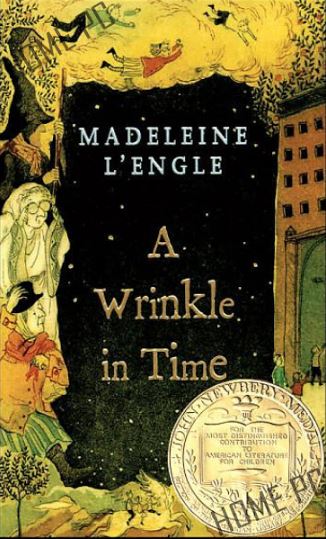
A Wrinkle in Time - Madeleine L'Engle
summary of A Wrinkle in Time
A Wrinkle in Time is the story of Meg Murry, a high-school-aged girl who is transported on an adventure through time and space with her younger brother Charles Wallace and her friend Calvin O'Keefe to rescue her father, a gifted scientist, from the evil forces that hold him prisoner on another planet. At the beginning of the book, Meg is a homely, awkward, but loving girl, troubled by personal insecurities and her concern for her father, who has been missing for over a year. The plot begins with the arrival of Mrs. Whatsit at the Murry house on a dark and stormy evening. Although she looks like an eccentric tramp, she is actually a celestial creature with the ability to read Meg's thoughts. She startles Meg's mother by reassuring her of the existence of a tesseract--a sort of "wrinkle" in space and time. It is through this wrinkle that Meg and her companions will travel through the fifth dimension in search of Mr. Murry.
On the afternoon following Mrs. Whatsit's visit, Meg and Charles Wallace walk over to Mrs. Whatsit's cabin. On the way, they meet Calvin O'Keefe, a popular boy in Meg's school whom Charles considers a kindred spirit. The three children learn from Mrs. Whatsit and her friends Mrs. Who and Mrs. Which that the universe is threatened by a great evil called the Dark Thing and taking the form of a giant cloud, engulfing the stars around it. Several planets have already succumbed to this evil force, including Camazotz, the planet on which Mr. Murry is imprisoned.
The three Mrs. W's transport the children to Camazotz and instruct them to remain always in each other's company while on their quest for Mr. Murry. On Camazotz, all objects and places appear exactly alike because the whole planet must conform to the terrifying rhythmic pulsation of IT, a giant disembodied brain. Charles Wallace tries to fight IT with his exceptional intelligence but is overpowered by the evil and becomes a robot-like creature mouthing the words with which IT infuses him. Under the control of IT, Charles leads Meg and Calvin to Mr. Murry and together they confront IT. However, they, too, are unable to withstand IT's power; they escape only at the last minute, when Mr. Murry appears and seizes Meg and Calvin, "tessering" away with them (traveling via another tesseract) to a gray planet called Ixchel inhabited by tall, furry beasts who care for the travelers. Charles Wallace remains possessed by IT, a prisoner of Camazotz.
On Planet Ixchel the three Mrs. W's appear once again, and Meg realizes that she must travel alone back to Camazotz to rescue her brother. Mrs. Which tells her that she has one thing that IT does not have, and this will be her weapon against the evil. However, Meg must discover this weapon for herself. When standing in the presence of IT, Meg realizes what this is: her ability to love. Thus, by concentrating on her love for Charles Wallace, she is able to restore him to his true identity. Meg releases Charles from IT's clutches and tessers with him through time and space, landing in her twin brothers' vegetable garden on Earth, where her father and Calvin stand waiting. The family joyously reunites, and the Mrs. W's visit the happy scene en route to further travel.
to read full book CLICK HERE
On the afternoon following Mrs. Whatsit's visit, Meg and Charles Wallace walk over to Mrs. Whatsit's cabin. On the way, they meet Calvin O'Keefe, a popular boy in Meg's school whom Charles considers a kindred spirit. The three children learn from Mrs. Whatsit and her friends Mrs. Who and Mrs. Which that the universe is threatened by a great evil called the Dark Thing and taking the form of a giant cloud, engulfing the stars around it. Several planets have already succumbed to this evil force, including Camazotz, the planet on which Mr. Murry is imprisoned.
The three Mrs. W's transport the children to Camazotz and instruct them to remain always in each other's company while on their quest for Mr. Murry. On Camazotz, all objects and places appear exactly alike because the whole planet must conform to the terrifying rhythmic pulsation of IT, a giant disembodied brain. Charles Wallace tries to fight IT with his exceptional intelligence but is overpowered by the evil and becomes a robot-like creature mouthing the words with which IT infuses him. Under the control of IT, Charles leads Meg and Calvin to Mr. Murry and together they confront IT. However, they, too, are unable to withstand IT's power; they escape only at the last minute, when Mr. Murry appears and seizes Meg and Calvin, "tessering" away with them (traveling via another tesseract) to a gray planet called Ixchel inhabited by tall, furry beasts who care for the travelers. Charles Wallace remains possessed by IT, a prisoner of Camazotz.
On Planet Ixchel the three Mrs. W's appear once again, and Meg realizes that she must travel alone back to Camazotz to rescue her brother. Mrs. Which tells her that she has one thing that IT does not have, and this will be her weapon against the evil. However, Meg must discover this weapon for herself. When standing in the presence of IT, Meg realizes what this is: her ability to love. Thus, by concentrating on her love for Charles Wallace, she is able to restore him to his true identity. Meg releases Charles from IT's clutches and tessers with him through time and space, landing in her twin brothers' vegetable garden on Earth, where her father and Calvin stand waiting. The family joyously reunites, and the Mrs. W's visit the happy scene en route to further travel.
this post was written and edited by HOME PC
to read full book CLICK HERE
Subscribe to:
Posts (Atom)
-
SUMMARY OF THE BFG As The BFG begins, Sophie lies in bed in an orphanage, unable to sleep. She creeps to the curtains to shu...
-
The night wore his wolf suit and made mischief of one kind and another ...
-
review of The Cat in the Hat Dr Seuss started writing his books with the idea of providing texts that would make learning to ...